Savannah is easy to admire before you understand it. The live oaks, ironwork, brick sidewalks and shaded squares make a powerful first impression, but the city becomes far more interesting when you see how its design, river and coast have shaped daily life for nearly three centuries.
For a first visit, resist the urge to treat Savannah as a checklist of photogenic landmarks. Think of it instead as a planned colonial town, a major port, a place built amid Indigenous diplomacy and forced labor, a Civil War objective, and a preservation success story that is still changing. That perspective will help you decide where to linger—and why it matters.
Start with the city’s original idea: a town made of neighborhoods
Savannah was founded in 1733 at a site then known as Yamacraw Bluff, above the Savannah River. James Oglethorpe led the English colonists, but the founding story also involves Tomochichi, leader of the Yamacraw, and Mary Musgrove, whose knowledge and diplomacy were essential to relations between the newcomers and Native communities.
The city’s famous layout was not designed simply to be beautiful. Its repeating wards paired homes, public buildings and a central square in a compact pattern that encouraged neighborhood life while making the settlement easier to organize and defend. Savannah eventually grew to 24 original squares; 22 remain today.
On your first walk, do not try to conquer all of them. Choose a cluster and notice the pattern: a green square at the center, broad streets around it, and important civic or religious buildings set nearby. The squares are Savannah’s original public infrastructure. They are why the Historic District feels walkable, social and surprisingly calm even when the city is busy.
For deeper context before or after your walk, the Georgia Historical Society’s overview of Savannah’s city plan is a useful introduction.

Use the waterfront to understand why Savannah exists here
The Savannah River is more than a scenic edge to the Historic District. It explains the city’s location, economy and outward-looking character. From the bluff, Savannah had access to an inland river system and the Atlantic beyond it. Goods, people, military supplies, ideas and wealth all moved through this port city.
That history is visible in the steep connection between the bluff and the riverfront. The old commercial district developed below the higher ground because the river was where ships and cargo belonged. Walk the waterfront with that practical reality in mind: the handsome brick buildings and cobbled passages were part of a working trade landscape, not originally a leisure district.
The port also connects Savannah to the difficult history that should be part of any honest first visit. Georgia’s initial prohibition on slavery was repealed in 1750. Savannah became a significant port in the Atlantic slave trade, while enslaved African people and their descendants performed indispensable labor across the city and coastal region. The prosperity reflected in many of Savannah’s landmark houses, churches and mercantile buildings cannot be separated from slavery, plantation agriculture and cotton commerce.
Look beyond the architecture—and ask who built the city
Savannah’s architecture is worth your attention, but it should be read as evidence, not decoration. Grand townhouses, carriage houses, warehouses and churches reveal changing styles and fortunes. They also point to unequal systems of wealth and labor.
Make room for a historic site or museum that directly interprets slavery and Black life in Savannah, rather than relying only on a broad overview from a walking tour. The Owens-Thomas House & Slave Quarters is one important place to consider because it presents the domestic and working spaces of an urban household, not just the elegant rooms seen by guests.
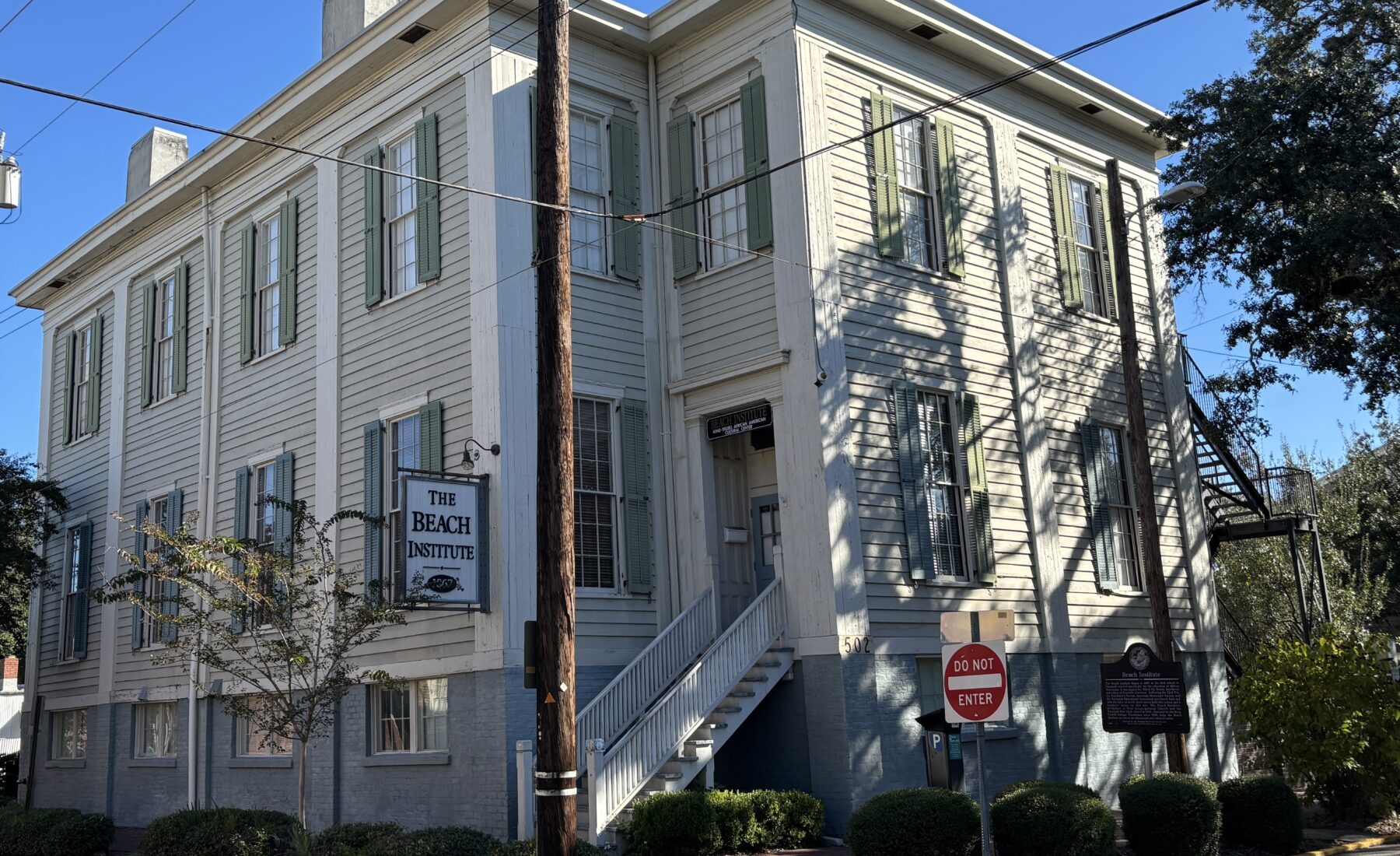
Also notice that Savannah’s Black history extends well beyond antebellum narratives. Black congregations, educators, entrepreneurs, soldiers and civic leaders have shaped the city through Reconstruction, segregation, the Civil Rights Movement and the present day. A first visit is better when it includes this continuing history, not only the colonial and Victorian chapters.

See the Civil War coast from Tybee and Fort Pulaski
Tybee Island is the natural extension of Savannah’s history-first itinerary. The beach is part of the appeal, of course, but the island also tells the story of the river entrance and the people responsible for navigating it. The Tybee Island Light Station began as a daymark project in the colonial era; the lighthouse standing today traces to a rebuild completed in 1773. Its purpose was straightforward and enduring: help mariners find the Savannah River.
On the way to Tybee, Fort Pulaski on Cockspur Island provides a vivid lesson in how quickly technology can reshape history. Built to guard Savannah’s harbor, the massive brick fort was thought to be formidable. In April 1862, Union forces firing rifled artillery from Tybee Island breached its walls after roughly 30 hours of bombardment. The event demonstrated that masonry coastal forts were vulnerable to new weapons and helped close Savannah’s port to Confederate traffic.
Fort Pulaski also holds stories of enslavement, freedom and imprisonment. During the war, it served as a haven for formerly enslaved people as well as a military site and prison. Give the place enough time to be more than a quick photo stop; the moat, parade ground and damaged brickwork make the scale of the story easier to grasp. The National Park Service’s Fort Pulaski page offers background and current visitor information.
Understand Savannah’s Civil War story as an emancipation story, too
Visitors often know that Union General William T. Sherman captured Savannah in December 1864 at the end of the March to the Sea. The more consequential local story is what followed. In January 1865, Sherman and Secretary of War Edwin Stanton met in Savannah with 20 Black ministers and community leaders to discuss the needs of newly freed people.
That meeting informed Special Field Orders No. 15, the order associated with the phrase “forty acres and a mule.” It reserved coastal land for settlement by formerly enslaved families, including land on Georgia’s Sea Islands. The policy was later reversed, a fact that matters when considering the long legacy of dispossession and unequal access to property along the coast.
This is one reason Savannah rewards visitors who slow down around markers, churchyards, museums and historic homes. The city’s past is not a simple tale of preserved beauty. It includes conflict over freedom, land, labor and political power whose effects are still visible.
Notice that preservation is one of Savannah’s modern achievements
The Historic District did not survive untouched by accident. By the mid-20th century, demolition, disinvestment and car-centered redevelopment threatened many older buildings and parts of the original urban fabric. Local preservation advocates organized in the 1950s, helping shift Savannah toward the conservation-minded city visitors recognize today.
That makes preservation part of the story, not merely the setting. When you walk past restored row houses, intact streetscapes and squares that still function as gathering places, you are seeing the results of choices made by local residents. Preservation has protected remarkable places, while current conversations continue around affordability, tourism, neighborhood life and whose histories receive attention.
How to make your first Savannah visit feel less rushed
A satisfying history-first visit does not require an exhaustive itinerary. Choose one small area of the Historic District, one site that addresses the city’s difficult past, and one coastal stop. Let those three experiences speak to one another.
- Walk a few squares slowly: Look for the relationship between the central green space, surrounding homes and civic buildings.
- Spend time near the river: Read the waterfront as a working port landscape, not just a dining and shopping zone.
- Choose fuller interpretation: Prioritize a museum, house museum, church or guided experience that discusses slavery, Reconstruction or Black civic life with care.
- Save room for the coast: Tybee’s lighthouse and Fort Pulaski explain why Savannah’s river access mattered strategically and commercially.
- Leave a few places unseen: Savannah is better revisited than speed-run. One thoughtful afternoon can be more memorable than ten hurried stops.
The best first-time Savannah guide is ultimately a way of looking. Let the squares show you a city plan built for community and control. Let the river reveal a global port. Let Tybee and Fort Pulaski explain the coast’s strategic stakes. And let the stories of Native diplomacy, slavery, emancipation and preservation give the beauty around you its full meaning.