Savannah is often introduced through its architecture, restaurants, and historic streets, but its best outdoor moments are usually quieter: a breeze moving through a square, the silver-green flash of marsh grass, a long beach walk before the day warms up. The city and coast reward visitors who slow down, while residents have plenty of reasons to trade a routine afternoon for a trail, waterfront bench, or oak-shaded ramble.
These scenic things to do in Savannah and Tybee Island move beyond the standard photo stops. Some are easy additions to a day downtown; others call for a short drive and a water bottle. Together, they show the Lowcountry at its most memorable: lush, tidal, weathered, and beautifully unhurried.
1. Walk Savannah’s squares without trying to “do” them all
The Historic District is best experienced at walking speed. Rather than treating Savannah’s squares as a checklist, choose a stretch of the grid and give yourself time to notice the differences between them. Some feel formal and monument-centered; others are more enclosed, with deep shade, brick sidewalks, and the sound of traffic fading at the center.
A satisfying route begins around Telfair Square or Orleans Square and heads south toward Monterey Square, with detours whenever a porch, garden gate, or unexpected bit of dappled light catches your attention. Early morning is especially good for photography and a calmer pace. Late afternoon brings softer light and more life to the sidewalks. The goal is not mileage. It is to understand why Savannah can feel green even in the middle of a city.
2. Linger in Forsyth Park beyond the fountain
Forsyth Park is the obvious outdoor classic, and it earns that status. The fountain at the north end is worth seeing, but the park is more useful when you keep walking. Its broad central promenade, mature trees, lawns, paths, sports courts, and garden spaces make it a genuine neighborhood park rather than simply a sightseeing backdrop.
For visitors, this is an excellent place to begin or end a day in the Victorian District. For locals, it is one of the easiest places to fit fresh air into an ordinary schedule: bring coffee, make a circuit under the oaks, or settle into a patch of shade with a book. On warm months, go earlier than you think. Savannah heat gathers quickly after midday, while the morning air often makes the same walk feel entirely different.

3. Take a reflective walk at Bonaventure Cemetery
Bonaventure Cemetery is not a park, and it should be approached with the respect due to an active burial ground. Still, its landscape is one of Savannah’s most affecting outdoor settings. The roads and paths wind beneath live oaks, palmettos, camellias, and moss, with views toward the Wilmington River at the edge of the grounds.
This is a place for an unhurried, observant walk rather than a rushed tour. Stay on established roadways and pathways, give families and services privacy, and resist stepping into burial plots for a closer photograph. The scenery is at its strongest on an overcast morning, when the canopy seems to hold the light close, but any quiet visit reveals the blend of horticulture, remembrance, and riverfront geography that makes Bonaventure distinctive.
4. See the live oaks and marsh at Wormsloe
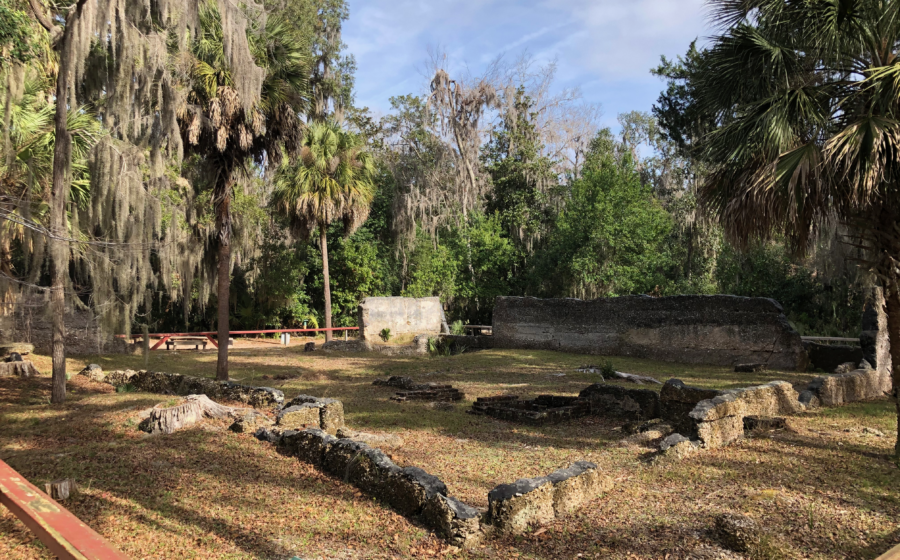
Wormsloe State Historic Site is known for its long avenue of live oaks, but the experience should not stop at the entrance drive. The site also offers an interpretive route that moves past tabby ruins and toward the marsh, where the landscape opens from shaded woodland into classic coastal Georgia scenery.
It is a strong choice for travelers who want history and nature in the same outing, as well as for residents looking for a walk that feels removed from downtown without requiring a full day. The oak avenue is undeniably photogenic, but the marsh portion gives the visit more dimension. Listen for birds, notice the change in vegetation, and allow time for the flat, horizontal view across the grass. That transition—from tunnel-like oak canopy to broad tidal landscape—is the point.
5. Follow the boardwalks at Skidaway Island State Park
For a close look at the ecosystems that shape coastal Savannah, head to Skidaway Island State Park. Its trails pass through maritime forest, salt flats, tidal creeks, and marsh. The Sandpiper Trail Loop is a particularly approachable option, with boardwalk sections and a level route that makes the scenery accessible to a wide range of walkers.
Skidaway is a good antidote to the idea that Savannah nature is only about grand old trees. Here, the details matter: fiddler crabs at the edge of the mud, cordgrass bending in a breeze, changing water levels, and the layered sounds of birds and insects. Bring binoculars if you have them, but do not feel obligated to turn the walk into a wildlife mission. Even a short loop offers a clear sense of how much movement and life exists in the marsh.

6. Pair Fort Pulaski with the McQueen’s Island Trail
The drive toward Tybee Island becomes more scenic around Fort Pulaski National Monument, where the Savannah River, marshes, historic fortifications, and open sky converge. The monument has several trails, including routes that pass through woods and marsh, as well as the Lighthouse Overlook Trail, which provides views toward Cockspur Island Lighthouse and the river.
Nearby, the McQueen’s Island Trail follows the former Tybee rail line for six miles. Its packed-gravel surface is popular with walkers, runners, and cyclists, and its long, linear profile makes it ideal for choosing your own distance. You do not need to complete the whole trail to enjoy it. Walk out until the marsh opens wide enough to make you pause, then turn back. Go prepared for sun, insects, and changing conditions, especially in the warmer part of the year.
7. Choose North Beach on Tybee for a more natural shoreline feel
North Beach offers one of Tybee Island’s most scenic combinations: broad sand, dune views, the lighthouse nearby, and the Savannah River meeting the Atlantic beyond the shore. It often feels less concentrated than the island’s busier south end, which makes it a good choice for a long beach walk, birdwatching, shell hunting, or simply watching cargo ships move through the channel.
Keep your eyes on the water and along the tideline. North Beach is especially rewarding for shorebirds, and dolphins are sometimes visible offshore. Respect the dunes by using designated crossovers and staying out of protected areas. The dunes are not just part of the view; they are a vital part of the island’s coastal protection. A visit here is at its best when you keep expectations simple: walk, look, listen, and let the horizon do the work.

8. Catch sunrise or sunset from Tybee’s South Beach and Pier
South Beach is Tybee’s social shoreline, but it can still be scenic if you visit around the edges of the day. At sunrise, the beach is often at its most spacious, with fishermen, walkers, and early swimmers sharing the soft light. In the evening, the pier gives you a straightforward place to look out over the ocean and feel the shift from beach day to coastal night.
It is also one of the easiest outdoor options for multigenerational groups. One person can stroll the sand while another prefers the pier or a nearby bench. As always on the coast, pay attention to weather, beach flags, and water conditions. Avoid walking on jetties or sandbars, and do not let a pretty view distract from tide and current safety.
9. Make room for the marsh from the water
A guided paddle or boat outing is one of the best ways to understand why the Savannah area looks the way it does. From the water, the coast becomes less like a strip of beach and more like a connected system of creeks, oyster beds, grasses, islands, and shifting tides. Kayaking can be peaceful, but it is not interchangeable with a casual lake paddle: local currents, wind, heat, and changing tides deserve respect.
If you are new to coastal paddling, go with an experienced local guide or choose a calm, protected route recommended for your skill level. Little Tybee Island, an undeveloped state-owned preserve accessible only by boat, is a remarkable destination for experienced and properly prepared visitors. Whether you reach it or not, a few hours in the marsh will change how you see the drive between Savannah and Tybee.
Plan for Savannah’s outdoor rhythm
The best time of day matters as much as the destination. In warmer weather, begin early, carry more water than you think you need, use sun protection, and expect mosquitoes and gnats near marsh and wooded trails. After rain, brick, shell, and natural surfaces can be slick or uneven. On Tybee, check beach and weather conditions before getting in the water.
Most importantly, leave each place looking like you found it. Stay on marked trails, protect dunes and marsh edges, keep wildlife wild, and pack out what you bring in. Savannah’s scenery is not confined to postcard views. It is a living coastal landscape, and the more gently you move through it, the more it gives back.